Platform for Labour Action (PLA) is a National Civil Society Organization that was founded in the year 2000. PLA is focused on promoting and protecting the rights of vulnerable and marginalized workers through empowerment of communities and individuals in Uganda.
21,463
Lives impacted
22
years of service
Our impact; stories of change
- Details
- Category: Blog
INTRODUCTION As the world commemorates the International Day Against Child labour on Friday, 12th June 2020 under the theme; “COVID-19: Protect children from child labour, now more than ever”, PLA takes stock of the situation of child labour in the wake of COVID-19.
COVID-19 has plunged the world into a crisis of unprecedented scope and scale. In Uganda the pandemic has and continues to worsen the country’s development challenges of poverty, unemployment and limited social protection coverage. The Minister of Finance, Planning and Economic Development (MFPED) Uganda provided preliminary assessment on March 20, 2020 of the short-term impact of the pandemic, anticipating the increase in the number of poor people by 2.6 million. The business climate index published by the Economic Policy Research Centre (EPRC) estimated that 4,000,000 Ugandans could lose their jobs and source of livelihood if the Corona virus pandemic persists for the next six months.
The uncertainty and prolonged periods confined to small homes is leading to an increasingly stressful environment. Many households are being pushed into extreme poverty and hunger as parents who have lost income are increasingly unable to feed their families.
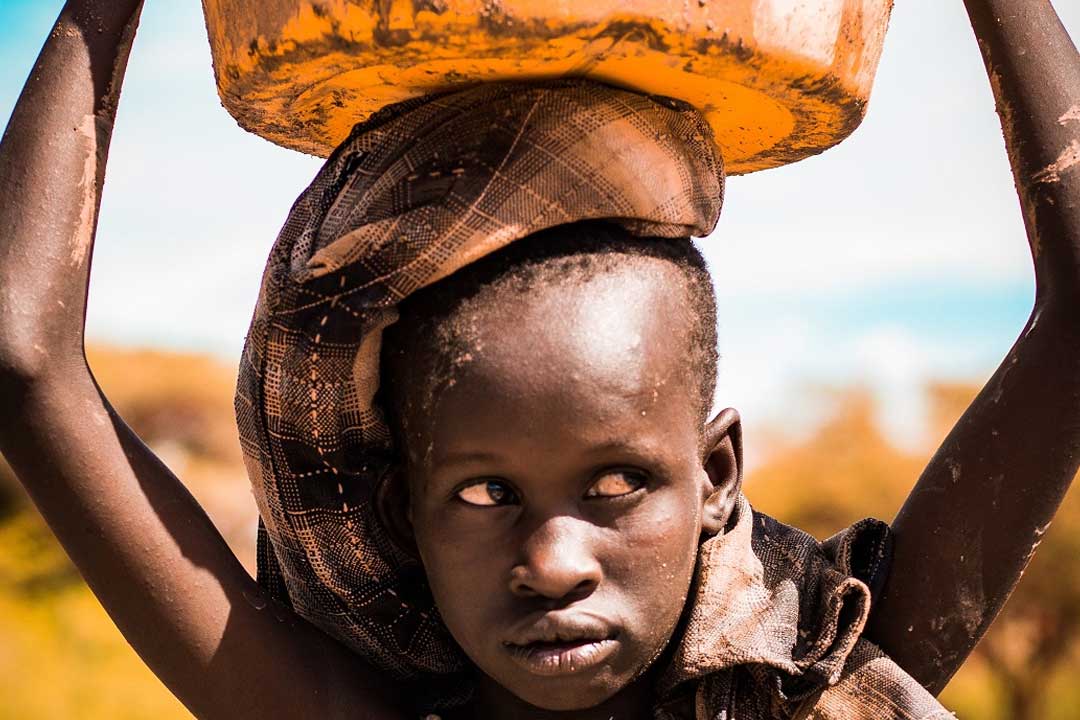
As a result, children are increasingly forced into hazardous and exploitative work to support their families. In one survey by a Joining Forces partner, 56% of respondents reported an increase in children working since lock down began (Save the Children child protection assessment, May 2020). In many parts of the country 60% of people surveyed have observed an increase in children involved in worst forms of child labour and child exploitation including girls drawn into commercial sexual exploitation, trading sex for money, food and even materials such as sanitary towels. Other young children have been observed selling alcohol, firewood and other items, or digging and planting to try and make ends meet. It should be noted that prior to COVID-19 outbreak, two million children were engaged in child labour activities (National Labour Force and Child Activity Survey (2011-2012). With the high prevailing poverty rates which have been worsened by the crisis, it is envisaged that more children will be forced and exploited in child labour activities. The suspension of schools has kept children home all the time and not learning, they are likely to be involved in child labour longer than if they were attending school.
Covid-19 has also increased the demand for cheap labour for youth (15-17 years) and exploitation. The fall in economic activity due to the quarantine measures will disproportionately impact legal working youths (15-17 years) in agriculture, domestic service and industrial sectors.
Criminal networks may actively use this global crisis to exploit vulnerabilities of children and incidences of child trafficking for labour exploitation both within and at the regional level are likely to increase during and post COVID-19 period.
CALL FOR ACTION!
Parents/guardians
- Support and protect your child (ren) during this period especially when they are now out of school to ensure that they are not exposed to exploitative forms of work and practices.
Government
- Enforce the existing laws that protect children from exploitative and hazardous forms of work and practices.
- Demand Government to foster the socioeconomic empowerment of families and communities so that they can better support children’s development; among others.
Business community
- Adopt and incorporate Business and Human Rights Principles in the day to day operations in order to protect children from exploitative forms of work.
Policy makers.
- Increase budget allocation for the Ministry of Gender, Labour and Social Development in particular to the probation and welfare offices as well as the labour officers to carry out their mandates of protecting children against exploitation and abuses.
- Amend the Employment Act of 2006 in particular the minimum age of employment of children to bring it in tandem with the Provisions of the Constitution of the Republic of Uganda.
Children
- Report to the authorities when your rights are violated particularly whenever subjected to child labour.
CONCLUSION
In Uganda, child labour has persisted even with the prevailing robust legal and policy frame work against child exploitation, this has been exacerbated by poverty, the growing levels of orphan-hood, and negative cultural norms that attach low importance on education especially for the girl child and that children are a source of labour, famine and food insecurity. This is therefore to call on government to address the above underlying major drivers of child labour.
- Details
- Category: Blog
For the past 25 years, Platform for Labour Action (PLA) has stood as a beacon of justice for workers in Uganda and beyond, dedicating its efforts to defending the rights of vulnerable and marginalized groups. Founded in 1998, PLA has worked tirelessly to address labour injustices and advance safe, inclusive migration. Its vision has remained consistent: ensuring that every worker whether at home or abroad is treated with dignity, fairness, and respect.
Promoting Safe Labour and Inclusive Migration
Labour migration is a growing reality for many Ugandans, especially youth and women who seek better livelihoods abroad. Yet, as Lydia Bwiite, Manager for Rights, Social Protection, and Accountability at PLA, emphasized in her recent reflection, “labour migration comes with many risks: exploitation, unsafe working conditions, human trafficking, and the denial of basic rights. Migrant workers, especially women, often return home with stories of abuse, unpaid wages, and psychological scars. This is why PLA has made it its mission to advocate for safer labour systems and policies that protect workers throughout the migration journey.”
PLA’s interventions have targeted both structural and immediate barriers faced by migrant workers. From legal aid and psychosocial support for victims of exploitation, to community sensitization on safe migration pathways, and policy advocacy with government and international actors, PLA has been central in creating safer environments for workers. By aligning its work with Uganda’s labour migration frameworks and global commitments such as the ILO conventions, PLA ensures that rights-based principles guide labour mobility.
PLA’s Legacy of 25 Years of Impact
Over the past quarter-century, PLA has translated its vision into tangible impact:
- Policy Advocacy and Reform: PLA has contributed to shaping policies that protect migrant workers, emphasizing gender-sensitive approaches that recognize the disproportionate risks women face.
- Legal Empowerment: Thousands of workers, both in Uganda and returnee migrants, have accessed justice through PLA’s legal aid clinics and strategic litigation efforts.
- Awareness and Education: PLA has led nationwide awareness campaigns to combat exploitation, unsafe migration practices, and human trafficking empowering workers and families with the knowledge needed to make informed choices.
- Partnership Building: By working with trade unions, civil society, government agencies, and international partners, PLA has amplified migrant workers’ concerns in decision-making spaces, ensuring inclusive migration governance.
- Community Impact: Survivors of exploitation supported by PLA have rebuilt their lives through economic empowerment initiatives, psychosocial recovery, and access to social protection systems.
As Lydia Bwiite highlighted, “when we protect migrant workers, we are not just addressing labour rights- we are safeguarding human rights, family welfare, and national development. Migrant workers contribute significantly to Uganda’s economy through remittances, but their wellbeing must come first.”
Looking Ahead: Renewed Commitment
As PLA celebrates 25 years of impact, this milestone is not only a celebration of achievements but also a call to action for the future. The organization is renewing its commitment to championing safe labour migration, tackling new challenges such as digital recruitment scams, climate-induced migration, and the growing informalization of labour.
PLA envisions a Uganda where migration is safe, orderly, and inclusive; where workers’ rights are non-negotiable; and where no worker whether local or migrant is left behind. The next 25 years will build on PLA’s legacy of resilience, partnership, and justice, ensuring that labour rights remain firmly recognized as human rights.
Authored by Angella Asiimwe, Consulting Blogger under Voice Consults
Hashtag: #PLAat25
- Details
- Category: Blog
Every day, thousands of Ugandans leave their homes some moving from rural communities to urban centers, others crossing borders in search of better opportunities. For many, labour migration represents hope: a chance to earn, to support families, and to build a better future. Yet, for too many, this dream is cut short by exploitation, unsafe working conditions, and broken promises.
For 25 years, Platform for Labour Action (PLA) has stood at the frontline of protecting and defending Uganda’s workers, with migrant workers at the heart of its interventions. PLA believes no worker should ever have to choose between survival and dignity and for a quarter century, it has worked to ensure rights, justice, and protection for those often silenced or forgotten.
Monica’s Journey: From Migrant Worker to Advocate
The story of Kebirungi Monica, a returnee and now a Social Protection Volunteer at PLA, reveals both the struggles and resilience of Ugandan migrant workers.
“My name is Kebirungi Monica, a former migrant worker. I once worked as a personal assistant in Saudi Arabia. Unfortunately, I could not complete my contract due to health complications. When I returned home, I faced so many challenges struggling with my health and also struggling to find a new direction for my life. It was one of the hardest times I have ever faced.” – Monica
Her experience reflects the reality faced by many Ugandan women abroad, where cases of exploitation and even sexual abuse have been reported in the media, including recent BBC coverage.
Yet Monica’s story did not end in despair. Through PLA’s reintegration support and empowerment programs, she found a way to rebuild her life and use her voice to help others.
“PLA gave me training and an opportunity to serve as a Social Protection Volunteer. This role has given me more skills as a social worker, more confidence, and more opportunities to help others in the community. I now guide people on correct migration procedures, on how to do due diligence, and on the importance of reporting suspicious or illegal recruitment practices.” – Monica
25 Years of Standing With Workers
PLA’s legacy over the last 25 years is one of impact, consistency, and courage. From Kampala to rural districts, and from grassroots communities to national and international policy spaces, PLA has positioned itself as a trusted defender of workers’ rights.
For migrant workers, PLA’s work has been especially transformative:
- Raising Awareness: Using community dialogues, radio, social media and TV platforms, PLA educates workers and families about safe migration, labour rights, and available protection services.
- Legal Aid and Justice: PLA provides legal representation, mediation, and psychosocial support for migrant workers in distress.
- Reintegration and Livelihoods: PLA ensures that returnees like Monica are not abandoned. Instead, they are connected to opportunities for skills development, psychosocial support, and entrepreneurship so that returning home becomes a chance to rebuild, not a dead end.
- Policy and Advocacy: As a member of the National Coordination Mechanism on Migration and the National Task Force on Trafficking in Persons, PLA influences policies that strengthen protection frameworks for Uganda’s migrant workers.
Why This Work Matters
Labour migration is not simply about movement; it is about people, their aspirations, and their dignity. For 25 years, PLA has been the voice ensuring that migration is not a path to exploitation but a pathway to empowerment.
Monica, now an advocate in her community, embodies this mission.
“I have been able to help returnees know about the support programs available for them. I also speak with young people who want to travel abroad. I tell them: make sure you do your research, make sure the company is safe, and do not be rushed into risky decisions. Sadly, I have met many people who did not do due diligence and are now suffering some exploited, some trapped, and some who may never return.” – Monica
Her voice is a reminder that every migrant worker matters -their rights, their dignity, and their dreams deserve protection.
A Call to Action
As PLA celebrates 25 years of tireless advocacy, it renews its commitment to Uganda’s workers especially migrant workers whose struggles too often remain invisible.
“To the community and to every returnee out there: continue to chase your dreams. And for those planning to travel, please do your due diligence. If you are struggling, remember there are support networks like PLA where you can find legal aid and reintegration support.” – Monica
For 25 years, PLA has proven that migration can be safe, fair, and dignified. With greater support, it can continue transforming the lives of thousands more workers like Monica.
Authored by Angella Asiimwe, Consulting Blogger under Voice Consults
Hashtag: #PLAat25

Latest from our blog